Parameter 01
Signal Generator & Electronics
The signal generator is the heart of any PEMF device — it's the electronic circuit that creates the electromagnetic pulse before it reaches the applicator and enters your body. The quality of the pulse generator determines whether the signal it produces is clean and therapeutically precise, or "dirty" and potentially counterproductive.
High-quality devices use analog signal generation: real circuits producing real, continuously varying waveforms. Many budget devices use digital-to-analog (D/A) conversion — a chip that approximates a waveform by switching thousands of times per second. Without precise D/A conversion and a high-quality pulse generator, the signal contains artefacts that shouldn't be there.
An important warning from PEMF engineering experts: without precise pulse generation, the signal becomes "dirty" — and a dirty PEMF signal could potentially harm the user rather than help them. This is why electronics transparency matters as much as marketing claims.
✓ What to look for
Devices that specify analog signal generation and disclose their pulse generation method. Ask whether the waveform is generated by physical circuitry or digitally synthesized. Research-grade devices prioritize electronics transparency — if a manufacturer won't tell you how their signal is generated, that is itself a red flag.
Parameter 02
Waveforms
A waveform is the shape of the electromagnetic pulse — how the field rises, holds, and falls over time. The single most important factor in a waveform is its rise and fall time. A sharp fall time creates a high peak voltage at the moment of collapse — and that spike is what drives ion exchange across cell membranes, producing the strongest biological effect.
PEMF waveforms can be ranked objectively by their biological effectiveness:
- BESTTriple Sawtooth Wave — "sophisticated / holistic." Three overlapping sawtooth frequencies simultaneously, producing a rich Fourier spectrum of harmonics. The broadest biological reach.
- GOODSquare Wave — "specific." Sharp rise and fall, strong ion exchange, well-suited for targeted and localized applications like muscle recovery or spot treatment.
- WEAKSine Wave — "outdated." Smooth and gradual, slow rise and fall, minimal peak voltage. Very limited biological effect for therapeutic applications.
- NONEStatic Magnets — no frequency, no pulsing, no electromagnetic field. Not PEMF. The two are fundamentally different technologies.
✓ What to look for
Triple sawtooth for whole-body, long-term cellular health. Square wave for targeted tissue stimulation. Devices that offer both give versatility. If a device cannot specify its waveform, or lists only "sine wave," the engineering is not competitive. Static magnets sold as PEMF are not PEMF.
Parameter 03
Frequencies
Frequency refers to how many pulses per second the device delivers, measured in Hertz (Hz). This is one of the most misunderstood parameters in the PEMF world — and one of the most important. The body responds best to frequencies that match its own cellular and bioelectric rhythms.
Dr. W. Ross Adey, a pioneering bioelectromagnetics researcher, identified what is now called the biological window: the frequency range of 0.5–30 Hz, within which cells are most responsive to electromagnetic stimulation. This range aligns precisely with:
- 🌍 Schumann Resonance — 7.83 Hz, the Earth's electromagnetic heartbeat, generated by lightning activity in the atmosphere
- 🧲 Earth's Magnetic Field Carrier Frequency — approximately 11.75 Hz (Klaus Piontzik)
- 🧠 Human Brainwaves — 0.1–30 Hz (delta through gamma)
The triple sawtooth waveform has an additional advantage here: it generates a large number of harmonics across the frequency spectrum simultaneously, dramatically increasing the probability that the signal will resonate with individual cells. This can be expressed as: Resonance = Frequency Spectrum × Probability.
✓ What to look for
Devices operating in the 0.5–30 Hz biological window, with Schumann and Earth-resonance alignment. Devices advertising hundreds or thousands of Hz are outside the biological window — higher frequency is not more therapeutic, it's simply a different (and largely ineffective) application.
Parameter 04
Intensities
Intensity measures the strength of the electromagnetic field, typically in Gauss, milliTesla (mT), or microTesla (μT). Like frequency, this is a parameter where bigger is not better — it's a matter of matching the biology.
The Earth's magnetic field at the surface is approximately 25–65 microTesla (0.25–0.65 Gauss). Research by Goodman and Blank identified a critical threshold: cells activate a protective, cell-preserving gene response at approximately 7–8 µT — but above approximately 70 µT, that response does not engage in the same way. For context, an MRI machine operates at 1.5–3 Tesla — roughly 20,000–40,000 times stronger than what your cells are designed to respond to therapeutically.
The lesson is not that stronger is safer — it's that the body has a biological window of intensity just as it does for frequency. Whole-body wellness use works best at intensities that mirror the Earth's natural environment. High-intensity devices (thousands of Gauss) are more stimulating than resonating — appropriate for certain acute applications, but not for daily whole-body use.
✓ What to look for
For daily whole-body use: low-intensity devices in the Earth-range (microTesla to low Gauss). For spot treatment or acute injury: moderate-to-high intensity can be appropriate. The best systems offer intensity adjustment so you can match the application to the goal.
Parameter 05
Organ Clock Programming
This is the most sophisticated parameter — and the one most people have never heard of. The Organ Clock is rooted in thousands of years of Traditional Chinese Medicine and confirmed by modern chronobiology: each organ system in the body has a 2-hour window of peak energy and activity during every 24-hour cycle.
Examples: The liver peaks between 1–3 AM. The lungs between 3–5 AM. The heart between 11 AM–1 PM. The small intestine between 1–3 PM. These aren't arbitrary — they're measurable rhythms in circulation, nerve activity, and metabolic function.
A PEMF device with Organ Clock programming reads the current time and automatically adjusts its frequency program to target the organ that is most receptive at that moment. Rather than delivering a one-size-fits-all session, it delivers a time-intelligent session — amplifying the body's own rhythms instead of working against them.
✓ What to look for
Devices that include an integrated organ clock — meaning the programming changes based on the time of day automatically, without you needing to select a protocol. This feature alone separates whole-body wellness devices from simple pain management tools.
Parameter 06
Coils & Applicators
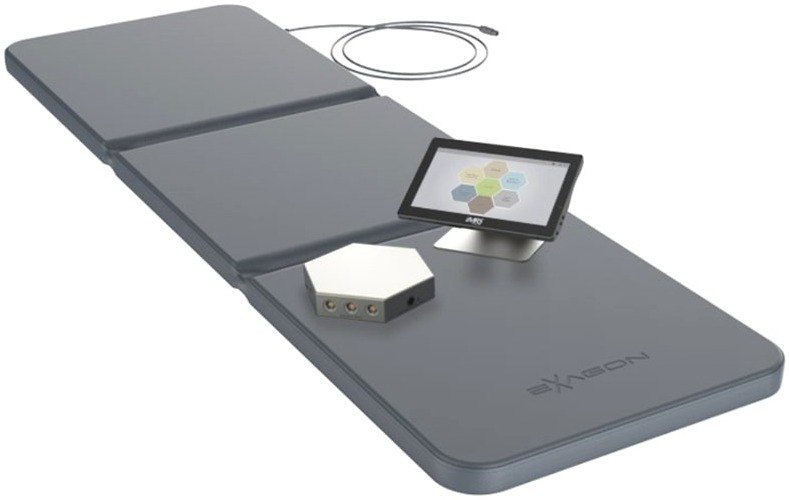
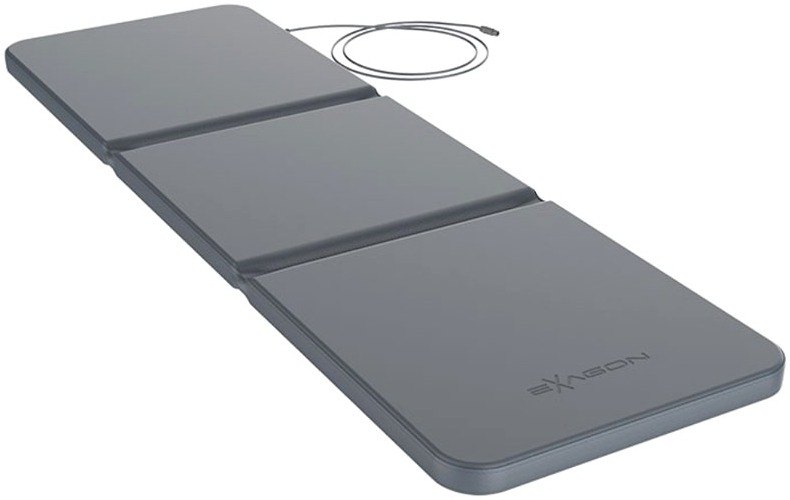
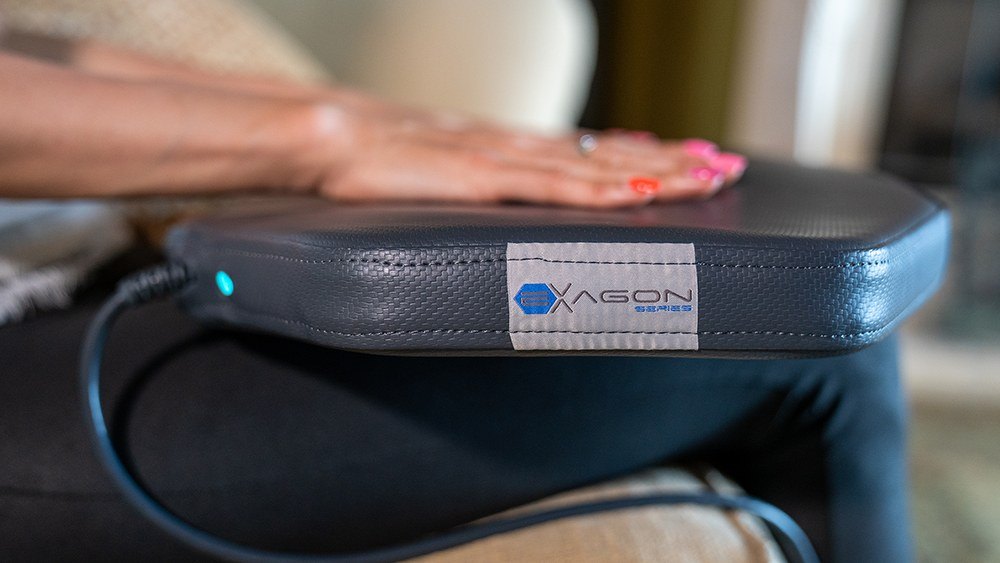
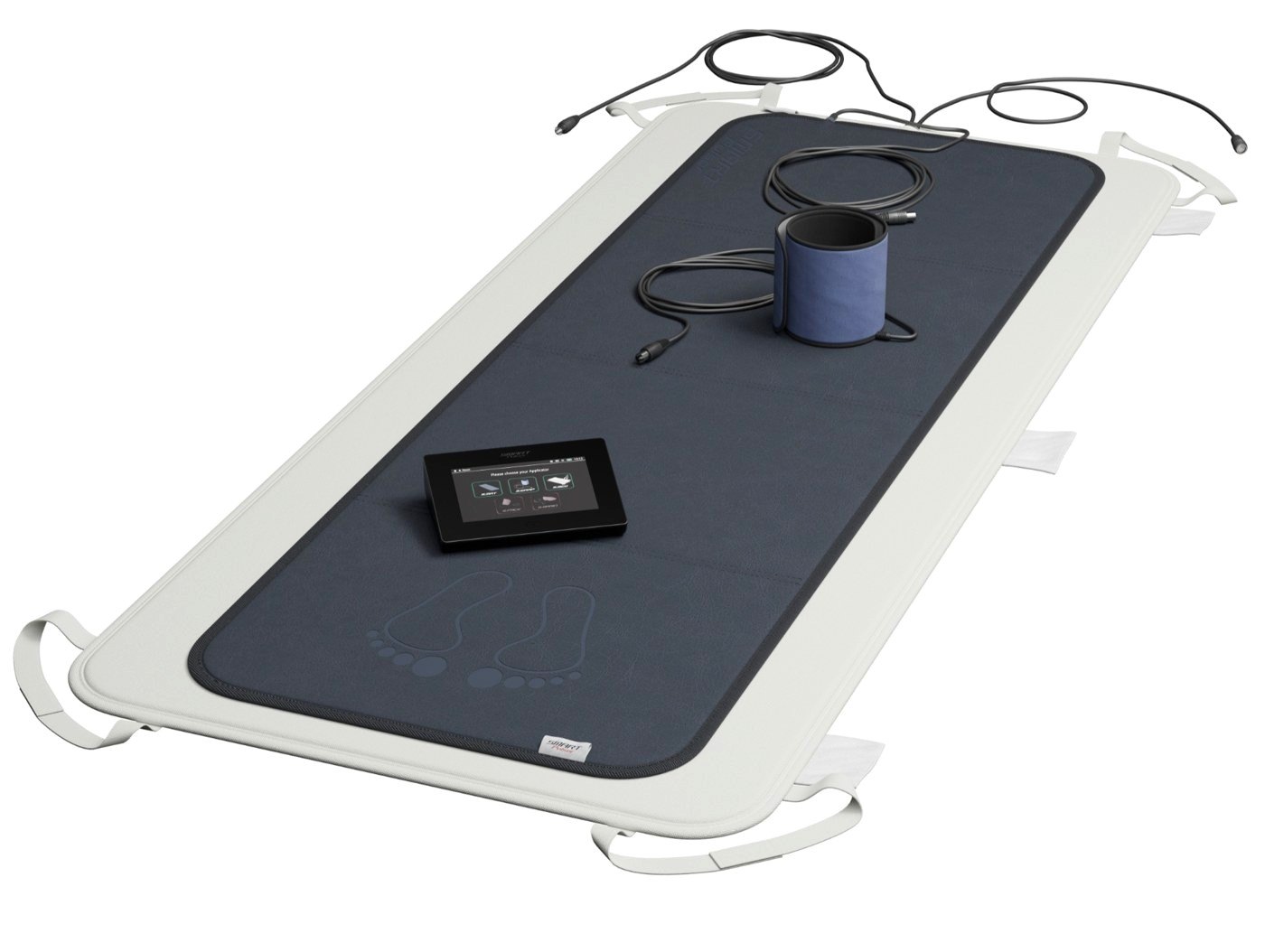
The coil is the final link in the chain — it's what actually converts the electronic signal into an electromagnetic field that enters the body. The material, construction, and design of the coil determine how faithfully the device delivers the signal its generator produces.
There are three main coil types in therapeutic PEMF, each with different characteristics:
- Meshwire Coils — the most common type in budget devices. Thin wires woven into a mesh pattern. Inexpensive to manufacture, but inconsistent field distribution and lower conductivity than solid alternatives.
- Solid Copper Coils — copper is one of the most conductive metals available. Solid copper coils deliver a cleaner, more consistent field, with better signal fidelity from generator to body. This is a significant step up from meshwire.
- Inductive Fibre Coils (IFC) — the latest generation. A proprietary coil technology designed to maximise field coherence and uniformity across the entire applicator surface. Used in Swiss Bionic's highest-tier systems.
One critical warning: coils should not be fully encased in plastic. Plastic impedes the electromagnetic field and reduces the effective intensity reaching the body. Quality devices specify their coil material and construction openly.
✓ What to look for
Solid copper coils at minimum. Inductive Fibre Coils for professional and advanced use. If a manufacturer does not disclose coil material and construction, that is a red flag. A device sold as PEMF with no coil specifications is not a device worth buying.